

Not every mission in the Church of Jesus Christ of Latter-Day Saints has cars. There are still plenty out there that use public transportation, bikes, or good-old feet. So, if you get a personal air-conditioned vehicle, you should consider yourself lucky.
Still, no wise organization is just going to let a bunch of 18-year-olds loose with cars. This article will describe how it works to drive a car as a missionary.
Gas Cards
Fortunately, gas money doesn’t come out of your bi-monthly allowance. You get a separate card for just gas (and, our mission allowed us to get a car wash once per transfer). Of course, the office will notice if you’re spending exorbitant amounts on gas, or if you’re using the gas card for non-gas purchases, but as long as you are using your card responsibly, it comes with unlimited gas money.
You will need to save your gas receipts and submit them to the office monthly. My mission did this via photos and email.
Designated Driver
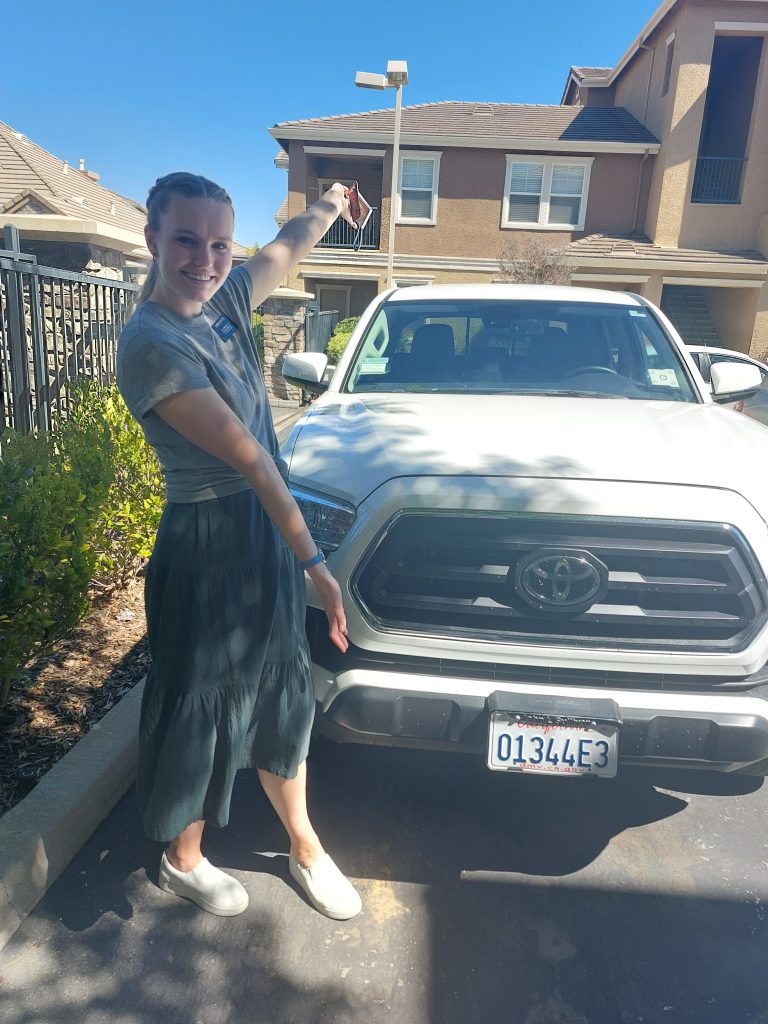
Each transfer, one member of the companionship is designated as driver. The other companion isn’t supposed to drive at all, unless on exchanges or in very needful circumstances.
Backing
There are no “passenger princesses” when you’re a missionary. If you’re not driving, and your car needs to go in reverse, for any reason, you are required to “back” the driver. This involves standing behind the car, making sure the coast is clear, and waving your hand to indicate how the driver should reverse. Once the car is ready to move forward, you may enter it.
Phones and Music
Different missions have different rules regarding using phones and listening to music in the car. My mission had strict car rules, and we were not allowed to use phones or listen to music, at all, in the car. We really learned how to yap with each other, 24/7.
Otherwise, most mission vehicles come equipped with fancy features like Bluetooth, so if music is allowed, you should have an easy time listening to approved tunes. To my knowledge, nobody is ever allowed to just play the radio.
Tiwi
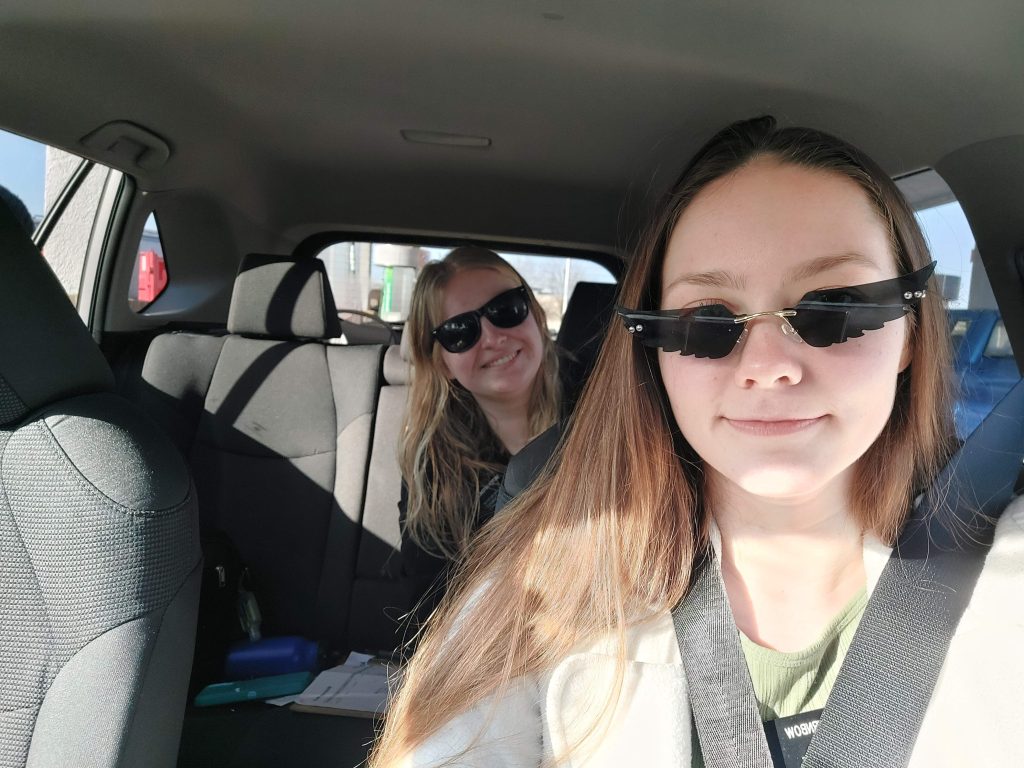
Tiwi is the bane of existence for all driving missionaries, but it’s also a blessing that keeps them safe. Tiwi is a device installed in all missionary cars. It can’t be overridden or tampered with (but if you’re tempted to try, I’d think twice – tampering is reported to the office). You’re stuck with it, so you better get used to it.
Each missionary is issued a “Tiwi card”, which looks like a credit card. You need to carry it around like you carry your credit card, because every time you drive, you press your card up to the Tiwi device to “log in”, so to speak. This is how the device tracks who is driving at a given time. If you try to drive without logging in, Tiwi will tell you – vocally, like Siri.
Tiwi tracks all of your driving activity, such as where you go, your speed, an even your seatbelt. It issues several warnings as you drive. If you are driving without a seatbelt, it will say “check your seatbelt”. If you’re driving above the speed limit, it will say “check your speed” (a common warning). If you accelerate, brake, or turn too hard, it will tell you “aggressive driving”. All of your Tiwi data, including your violations, is reported straight to the mission office.
Where You Can Go
You are allowed to drive your car anywhere in your area, unless otherwise specified. If you need to leave your area for anything besides expected trips, like District Council, you need to ask your Zone Leaders for permission. If you need to leave the zone, you ask the Assistants to the President for permission. You should NEVER leave your mission boundaries.
Mileage Restrictions

Unfortunately, you can’t just drive as much as you want – even if it’s for a good reason. Most missions have specified “mileage restrictions” for each area. This is a monthly allotment that you track. Every. Single. Day.
You are given a notepad called a “mileage sheet” where you’ll write down some general information about the car at the beginning of the month, and where you’ll track your miles every day. You’ll look at the odometer from yesterday, the odometer today, subtract the difference, and write it down. You’ll add that number to the previous day’s monthly score to track the number of miles you’ve used that month so far.
You can save your miles by getting rides from members, biking (if you have bikes), walking, or just not leaving your apartment (not recommended).
If you exceed your mileage allotment, you might get a call from the mission office. Or, nothing will happen. But try to stay within your limit, if you can.
Gender Rules
The general rule for people in the car is to stay with your own gender.
You can get a ride with non-missionary members of the opposite gender, as long as there’s a member that IS your gender, and over 16 years old, in the car.
You can’t ever drive missionaries of the opposite gender in your own car, or ride with missionaries of the opposite gender in their car, but you can do both of those things with missionaries of your same gender.
You can ride with missionaries of the opposite gender if you’re being driven by members, and there are adult members of both genders in the car.
Common Sense Things That Shouldn’t Need To Be Rules
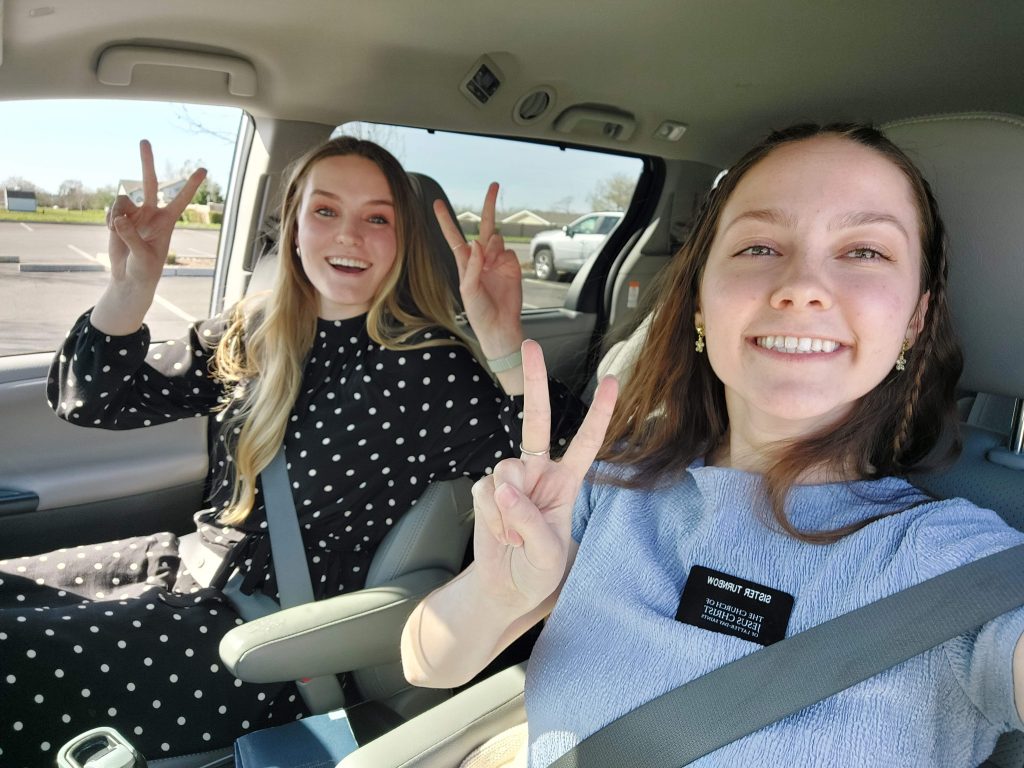
At my first zone conference as a missionary, my mission president got up and was very serious. He talked about his recent discovery: missionaries “baptizing” their car. This meant purposely driving recklessly over a bump so that the car would catch air. He stated that any missionaries caught doing this would immediately be sent home. Missionaries love to do dumb things.
Another basic rule is to never drive the car through standing water. This is a good rule of thumb for any drivers, but especially missionaries.
I also heard, through the grapevine, a story where some missionaries filled their gas tank with water and blessed it to be gas. This did not work, and it destroyed the car. Don’t do this, haha.
Consequences
Driving violations will be met with consequences, depending on the severity. The most common violations are Tiwi-related and, specifically, speeding.
If you exceed a certain number of violations, you could earn driving probation or have your driving privileges taken away entirely – for a transfer, longer, or for the rest of your mission.
As my mission president made clear, extreme driving recklessness could earn you a ticket home.
Overall, if you drive responsibly and try your best to follow the guidelines, you will be just fine!